Developing design related skills to create a STEM boardgame
The aim of this project was to learn more about game design and to further develop design skills such as 3D printing, physical modelling and using CAD software. This was also my first time conducting primary research directly with the target audience.
The intial brief I chose was to design a STEM based game for Primary school aged children.
Completed as part of my EPQ qualification.
Although this is an older project it was important to my development as a designer and identified toy and game design as an area I am passionate in.

Planning stage
Project aim(s):
- To design and prototype a STEM based game suitable for Primary school aged children
- Learn/ improve design related skills
Objectives/plan:
- Identify design skills relevant to the project
- Determine current skill levels, why these skills are important and how my progress can be measured
- Create Gantt chart to manage the project progression
- Evaluate existing similar products
- Research National Curriculum to identify STEM based topics and target age range
- Conduct expert interviews
- Create specification for outcome
- Evaluate different CAD softwares to choose the one best suited for this project.
- Identify what type of boardgame or toy the outcome should be
- Develop concept
- Evaluate using focus group made up of target audience
| Skill | Why is this skill important? | What is my current skill level? | How will I measure progress? |
| CAD software | To visualise ideas and communicate them to other people | Limited experience with SOLIDWORKS | Screenshot models at different stages to show progression |
| Primary research | To gather reliable information to support and evidence design decisions | No skill level/ never attempted before | Plan research beforehand and make targets that I can review after to see if they have been met |
| Prototyping/manufacture | To create a functional prototype to show the results of the project | Some previous knowledge of hand tools in the workshop | Quality of outcome will indicate skill level |
Research Stage
Existing Products
Existing toys and games were researched to find gaps in the market and identify what works and does not work in a game.
Toys researched in this section include:
- GoldieBloxs
- Lego
- Tinker Crate
National Curriculum
- The National Curriculum was used to identify what topics are taught to children at which age.
- By lining the games subject matter up with the curriculum it ensures that the information is age appropriate and the game could be used by teachers as a teaching aid
- This research only looked at topics that fell under Science and Maths to keep it relivant to the project (STEM)
- Intially research was done into most Primary school years (Year 1-6)
- Eventually the age range of 10-11 years old (Year 6) was chosen as the target audience as that age group would allow the educational element of the game to have more depth and the game could pull from any of the topics covered in previous years as well.
Specification
| Specification point | How |
| Encourage an interest in STEM related topics | Include STEM based topic as the game theme and incorperate it into the game mechanics |
| Appropriate for chosen age range/ target audience | Choose a topic from the National Curriculum specification for the target audience age range |
| Provide enjoyable learning experience | Provide clear instructions on how to play |
Prototyping
Concept
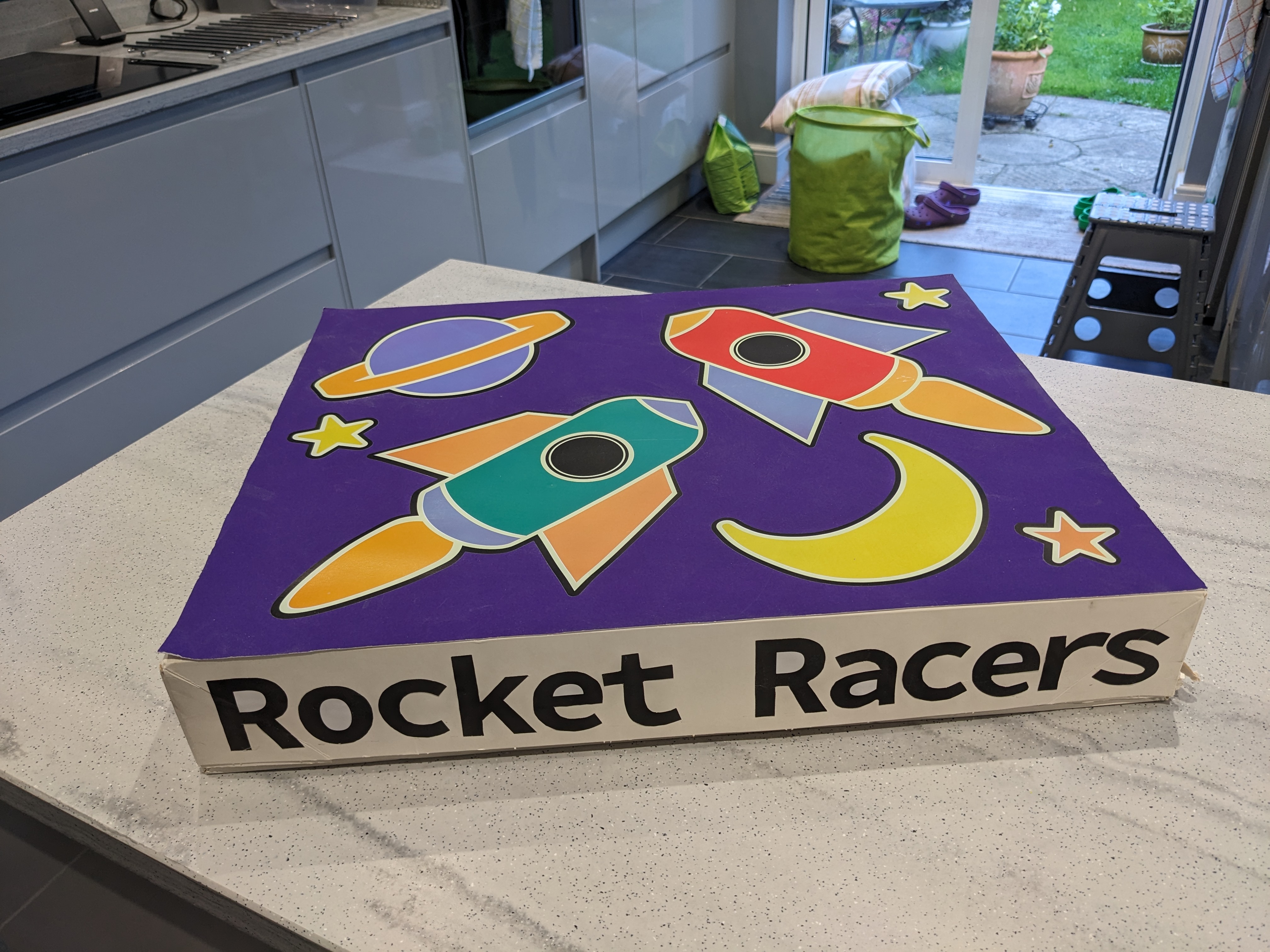
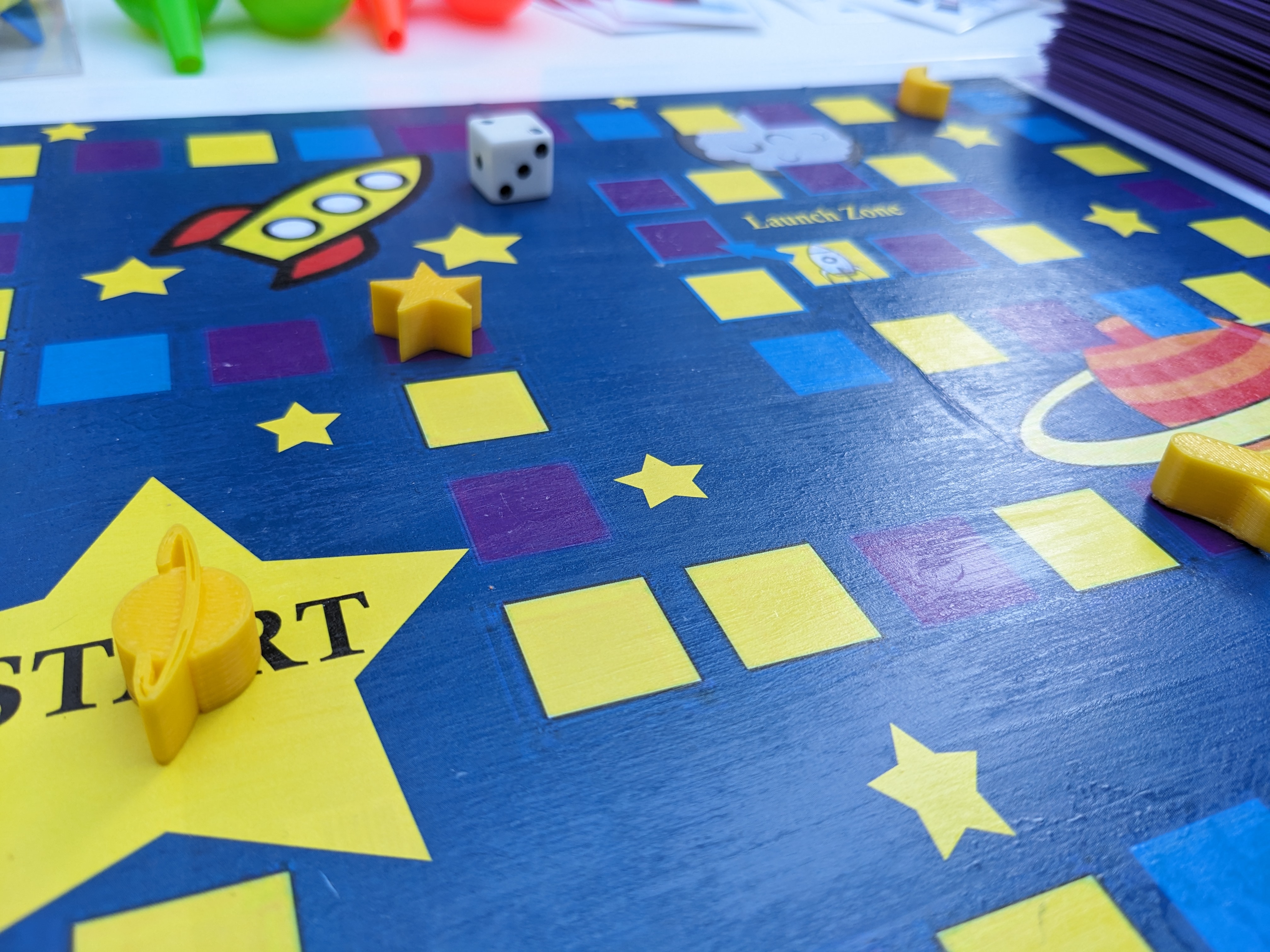
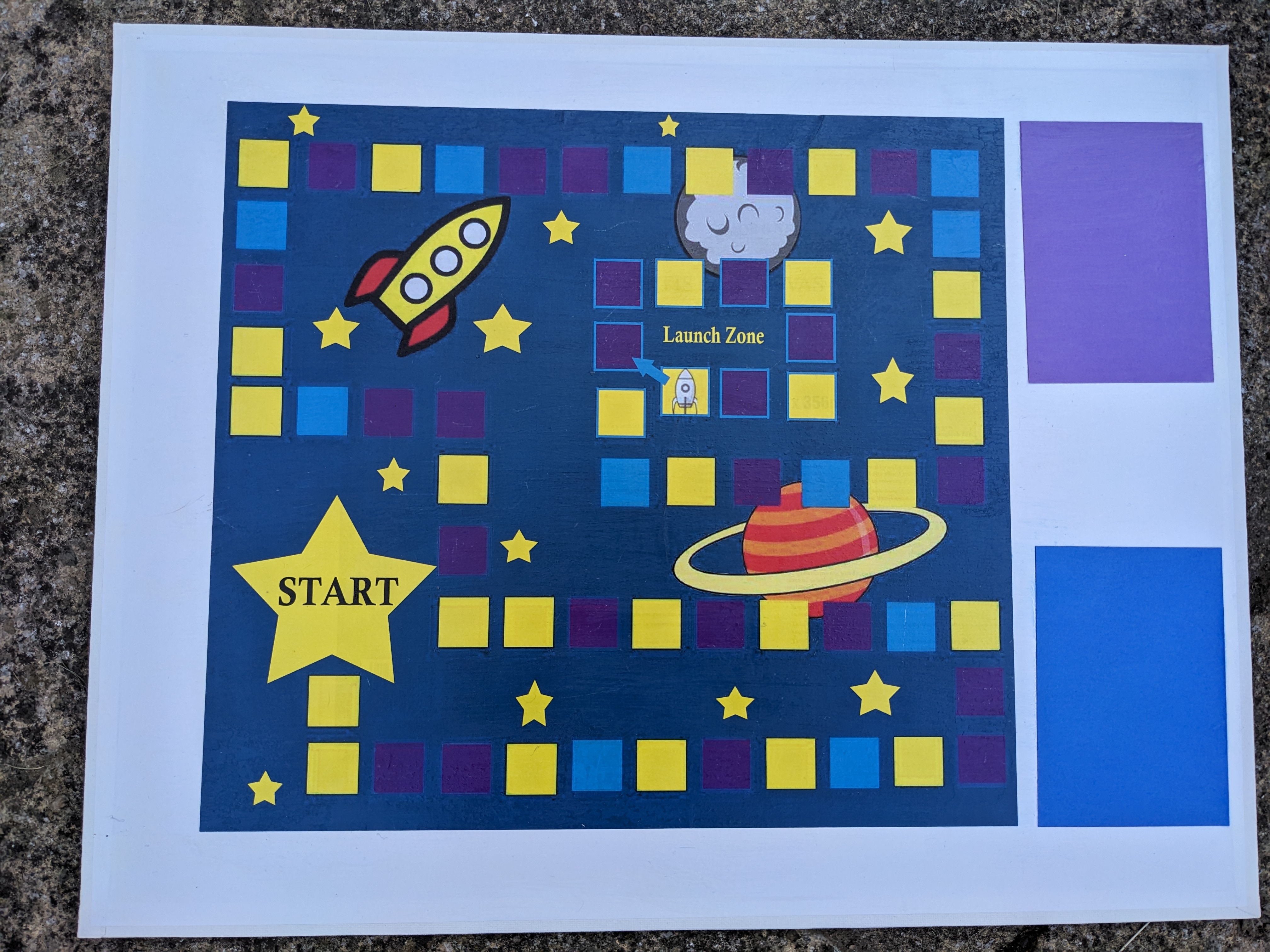
A space themed game where the players role a dice to move around the board and collect components by correctly answering space themed questions. The winner is the first person to collect all the components and launch their miniature plastic rocket.
Manufacture/ Materials
At the time I did not have access to all of the materials and equipiment required to make a fully functioning high-fidelity model so instead a mid-fidelity model with equivalent materials was made to demonstrate the concept.
| Component | Material/Manufacture |
| Board | White paint canvas |
| Space themed counters | 3D printed |
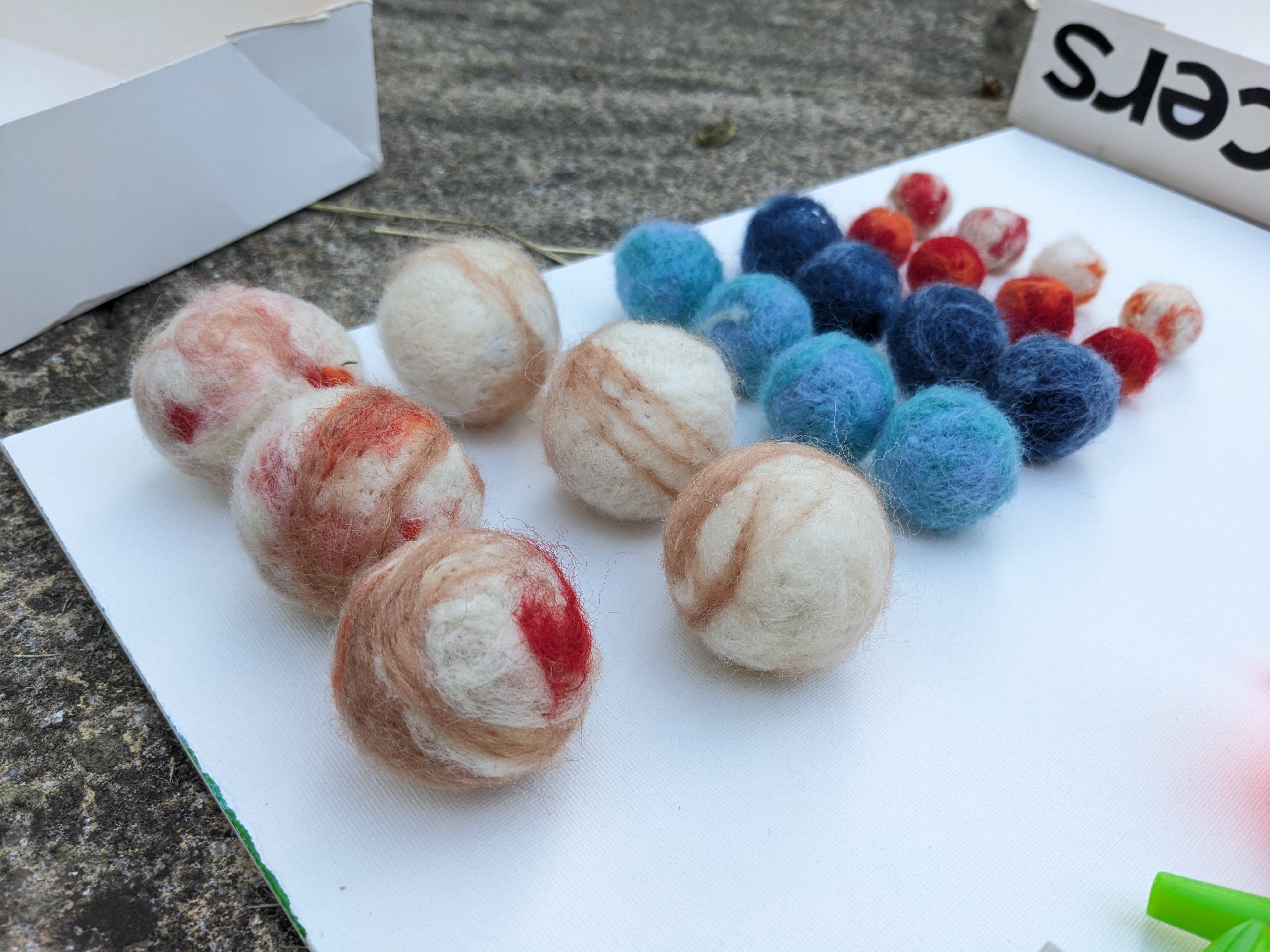
| Planet components | Felted polystyrene balls |
| Board graphics | Adobe Illustrator |
| Dice/ Rockets/Pumps | Purchased |
| Box graphics | Stickers |
| Action and Question cards | Lamenated card |


Focus Group Testing
To evaluate whether the project was successful I organised a school visit for the children to test and give feedback on the game.
 Katie Nock
You must be logged in to post a comment.